

Fußball 101: Bier
Bierdusche. 5km long lines. Clubs founded in breweries. The inextricable link between German beer and football explained.

There’s an old maxim, attributed to the author Stephen Morris, that I think readily applies to German culture. It goes like this…
“There is more to life than beer alone, but beer makes those things even better”
In no facet of German life is that idea more readily applied than football. Far from the consumption of beer being simply an adjunct to the matchday experience, either in stadiums or in bars, it is an integral part of celebration, a key driver of sponsorship incomes and a touchstone in many clubs origin stories.
While there are countless avenues I could explore, here are some of the intersections of Germany’s favourite sport and drink.
The regional customs of German beer
As is so often the case with other norms and traditions, the Anglicised view of German drinking culture is largely centred on Bavaria. The proliferation of beer halls in British cities, enduring images of buxom waitresses carrying countless maß in lederhosen and the unmistakable allure of a lads trip to Oktoberfest have obscured the hyper-regionality of consumption.
Take North-Rhine Westphalia for example. Düsseldorf is famed for Alt-Bier, a copper-coloured top-fermented drop similar to an IPA. Served in 0.2l glasses, waiters steadily supply you with a perfectly-cool and fresh beverage. While similar service-practices exist in rival city Köln, their beer, Kölsch is a lighter top-fermented lager-like brew which must be produced within 50km of the city limits. Debates over the superiority of each drink is part of an ongoing beef between the two cities.
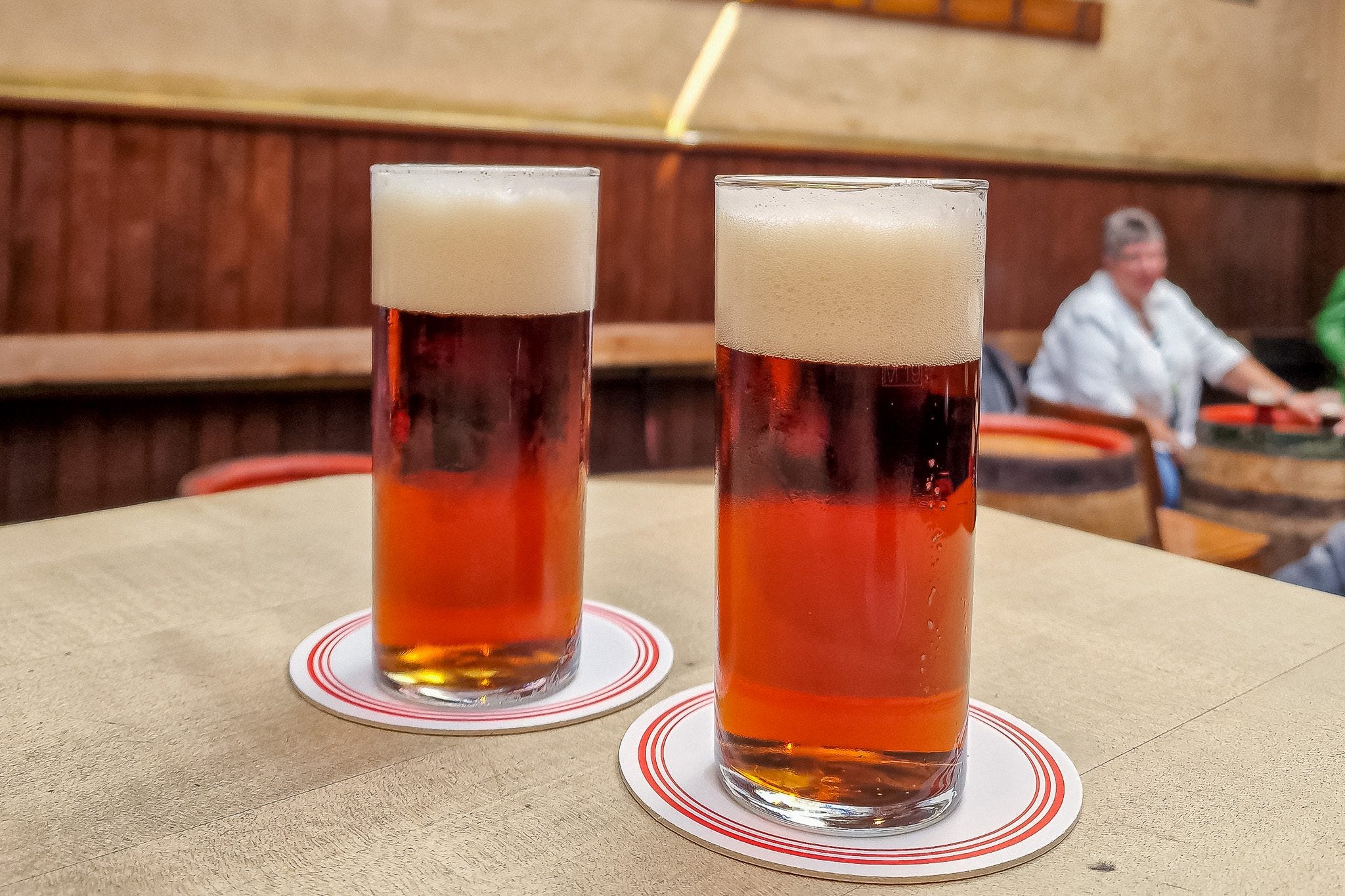
Berlin’s sour Weisses, southern Bavaria’s Helles, and the varying flavour profile of pilsners across the north and west of Germany speak to the fervent pride people take in their local fare. With beer purity laws dating back to 1516 and close to 1,500 breweries operating across the country, there is little need or desire to look far and wide for a refreshing Abendbier.
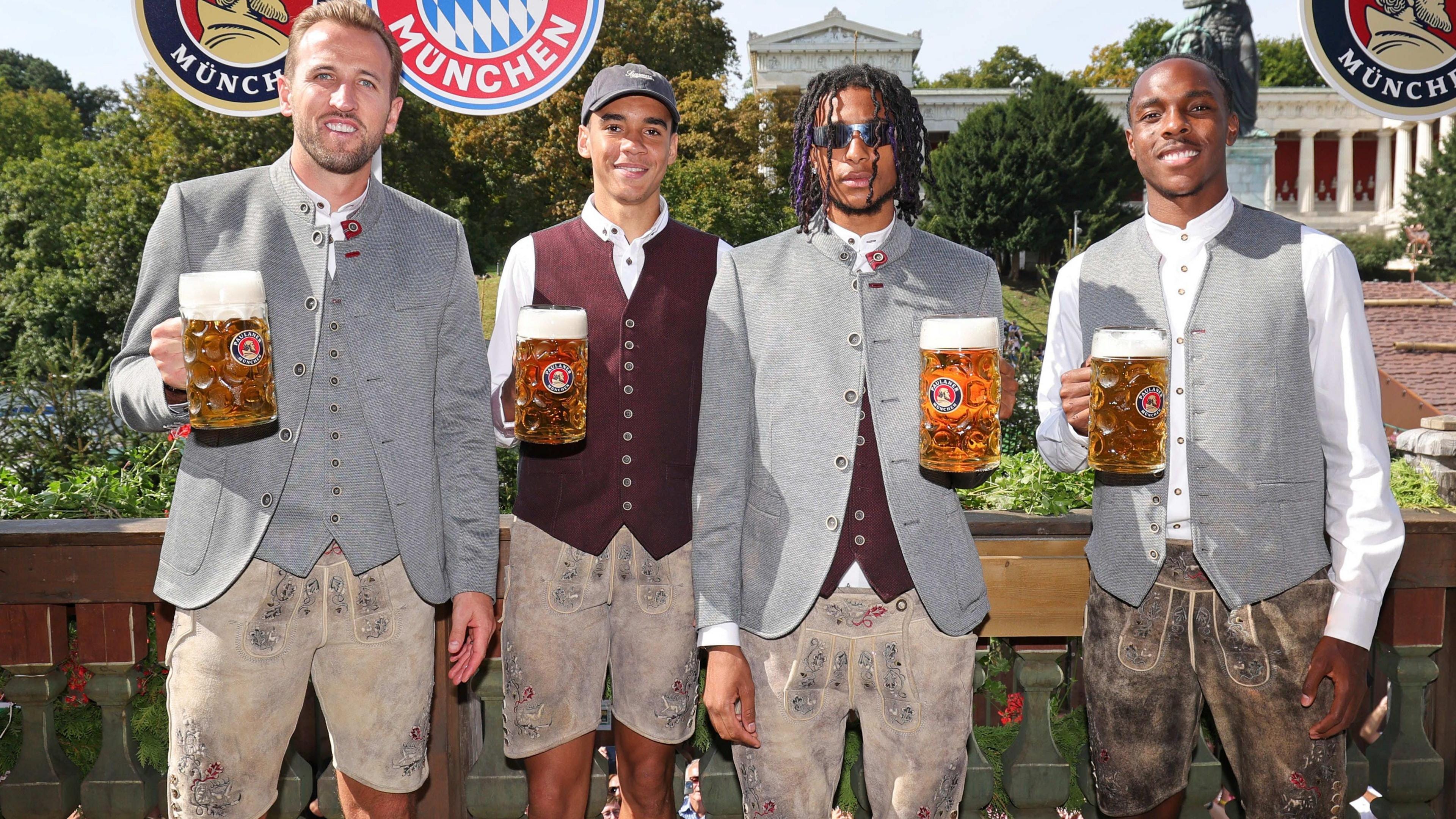
That manifests itself in the relationships between football clubs and local breweries. Every season, Bayern Munich’s stars can be seen in traditional garb at Oktoberfest, snapped with a litre glass of Paulaner in hand, while Beck’s has sponsored Werder Bremen for almost four decades.
Drinking on the terraces
Whereas English football has banned drinking in view of the pitch since 1985, with a view to curtailing violent behaviour, it is perfectly legal to enjoy a beer on the terraces in German football, leading to greater consumption within the stadiums themselves.
Borussia Dortmund sell an average of 60,000 litres of beer per home game, while Schalke’s 5km long beer tap (serving fans Veltins, a brewery which holds naming rights for the club’s ground until 2035/36) is a marvel of engineering that has garnered international coverage the world over.
Locally sourced beer also means there’s minimal markups in the ground themselves, with a 0.5l costing €5.20 on average in Bundesliga grounds during the 2025/26 campaign. The cheapest? A König pilsner at HSV’s Volksparkstadion would set you back just €4.30.
Editor’s note: The ability to drink on the terraces is without a doubt the biggest topic of conversation I have with English football fans when they ask me about the difference between watching football in the two countries. While I’ve become used to having a couple of tipples at the game, and no longer consider it a sign of a more advanced society as many of my compatriots do, there’s nothing like a trip home to remind me of how much better it is when you’re trusted to behave yourself around sport and drink. A hastily quaffed, tasteless and flat Carlsberg in a depressing gantry after queuing for all 15 minutes of half time? At £7? In this economy?
The difference in drinking cultures was probably best exhibited by the raft of press coverage ahead of Euro 2024, where the British daily papers put out warning missives to travelling England fans to behave themselves around the stronger German beers. At England’s Round of 16 game against Slovakia in Gelsenkirchen, Three Lions’ fans were stopped from drinking in their seats. At a previous game in Berlin, between Austria and the Netherlands, no such ban was in place. Our reputation always precedes us, it seems.
Bierdusche
Where celebrating athletes in sports the world over tend to spray champagne on the podium, German football opts instead for beer showers.
The tradition is closely linked with Bayern Munich, both as the rampant competitive force in German football and their links to Paulaner. After Die Rekordmeister lifted the Bundesliga title in the 2000/01 season, Brazilian forward Giovane Élber doused his manager Omar Hitzfeld in wheat beer, starting a tradition that has taken hold across the game.
In 2016, then RB Leipzig manager Ralf Rangnick pulled his hamstring attempting to evade a bath following his side’s promotion to the Bundesliga. A few years later ‘Bierdusche’ was officially added to the dictionary.
However, it is not universally appreciated. The DFB attempted to outlaw the practice during the 2010s, eventually acquiescing to allowing the beer shower to take place after official photographs have been taken.
Borussia Dortmund’s origin story
The links between German clubs and local breweries go back to the very origins of the game. In 1909, Borussia Dortmund was founded in Zum Wildschutz (trans: At the Poacher/Game Protector) a tavern-cum-restaurant near Borsigplatz.
Following an edict by Chaplain Hubert Dewald that would ban his parish from taking part in football on Sundays, a group of young locals held a meeting at the bar. When Dewald attempted to break up the dissidents, he was forcibly removed from the premises, reportedly falling down the stairs after a brief physical altercation. The founding members of what would become Borussia Dortmund, took their name from the nearby Borussia Brewery.
Criticism of German drinking culture and the influence of the ‘Beer Lobby’
The love affair between beer and football in Germany is not without its critics. In 2012, the European Centre for Alcohol Marketing (EUCAM) found that 36 of the top 50 clubs in the country have a beer sponsor, which they claim normalises excess consumption among younger fans. They have long levied for a ban on advertising for alcohol producers, while also suggesting restrictions on sales in stadiums. In 2020, the German government considered a temporary ban on sales to ensure proper adherence to ongoing Covid-19 protocols.
A 2023 short film produced by WDR, tracked the influence of the beer lobby in maintaining the right to use sport as a means to advertise their product. The piece also features the testimony of alcoholic fans in the Ruhr.
According to a Eurostat survey conducted in 2019, 40% of German men indulge in at least one episode of ‘binge-drinking’ once a month.
Editor’s note: As much as I enjoy a drink around football, the prevalence of excess consumption in stadiums is notable. On a trip to Wolfsburg, there were several Union fans that had drunk to excess on the return journey home, with one fan almost falling onto the tracks in front of a fast-moving train in front of me. Again, while this is somewhat common in the English game too, my anecdotal experience is that ‘problem drinking’ is more widespread in German football, especially among ultras groups. Outright prohibition is obviously a non-starter, especially as most fans practice reasonable consumption habits.
To remove beer from German football would be to lose an element of its history, rituals and atmospheres that are revered the world over. The English fans that talk glowingly of pints on the terraces are also missing the forest for the trees, however; drinking is just one small part of what makes the Bundesliga product so intoxicating. After all, there is more to life — and football — than beer alone.