

Die 56 — An update
Plans for the newsletter in the 2025/26 season.

We’ve been a bit quiet recently.
There’s a number of reasons for that. Earlier in the summer, I was travelling back to the UK to see family.
Trying to stay on top of work commitments with a change in schedule was difficult.
I have ADHD. That brings with it certain struggles in balancing work and my personal life. Basically, I was running on empty.
Trying to launch an ambitious project while battling burnout was probably too much for me to handle.
That doesn’t mean we aren’t looking to expand this newsletter in the season ahead.
For my new subscribers, I’ll fill you in.
Die 56 was a project that would see me visit all of the grounds in the top three tiers of German football in the 2025/26 season. Along the way, paying subscribers would receive an essay where I covered the most important story to each of those teams and cities I hit along the way. An accompanying vlog would detail my experience in travelling around the country.
We had some small wins along the way. Germs of partnerships were formed, and everyone I spoke to about the project was really positive about it. A number of you contributed to our Kickstarter fund. I know the idea had legs. But, in reality, trying to deliver such a project on my own was probably overly ambitious. Positive words don’t translate into funding.
This email isn’t a pity party. I’m proud that I gave it a go, but once it became clear that this version of Die 56 was unachievable, it made me anxious to post on the newsletter.
Instead, we’ll be launching a stripped back version of the project, which will likely span the next two seasons.
My goal is to hit at least two grounds per month. The articles will sit behind the paywall. That means paying subscribers will receive three exclusive articles per month. Two essays from our travels, and the Bundesletter Book Club which details the media on German football I’ve enjoyed over the previous month. The vlogs will remain free to view, and will be sent over the newsletter, and sit on a Youtube channel, which will be set up in the next month.
The price of a subscription will remain the same. That means for €5 a month, you will receive thoroughly researched and reported stories, you won’t be able to get anywhere else. If you contributed to the Kickstarter fund, but have yet to become a paid subscriber, this is the best way to help us achieve our aims of producing in-depth coverage of this fascinating football nation. As I discussed with Stefan Bienkowski on a recent pod (you should also subscribe to the excellent Gegenpressing Newsletter while I have your attention) with a few notable exceptions, too much of the English-language media on German football focusses on Bayern and Borussia Dortmund.
We will continue to publish free to read content. I’ve really enjoyed publishing guest posts over the past few months. Misha Verollet-Dahncke’s brilliant piece about Arminia Bielefeld’s day out for the DFB-Pokkal final is now the most read article on our platform; Sam White’s retrospective on the Kaiserslautern title victory in 1998 was the perfect blend of our respective publications. I’d love to supplement our regularly scheduled programming with more of these posts over the coming months.
We have two brilliant podcast episodes coming soon. We spoke to the inimitable Derek Rae about his love of German football, while Seb Stafford-Bloor took time out of his busy schedule to talk about his work covering the Florian Wirtz transfer saga. I’d be as bold as to say these are the best podcasts we’ve produced thus far.
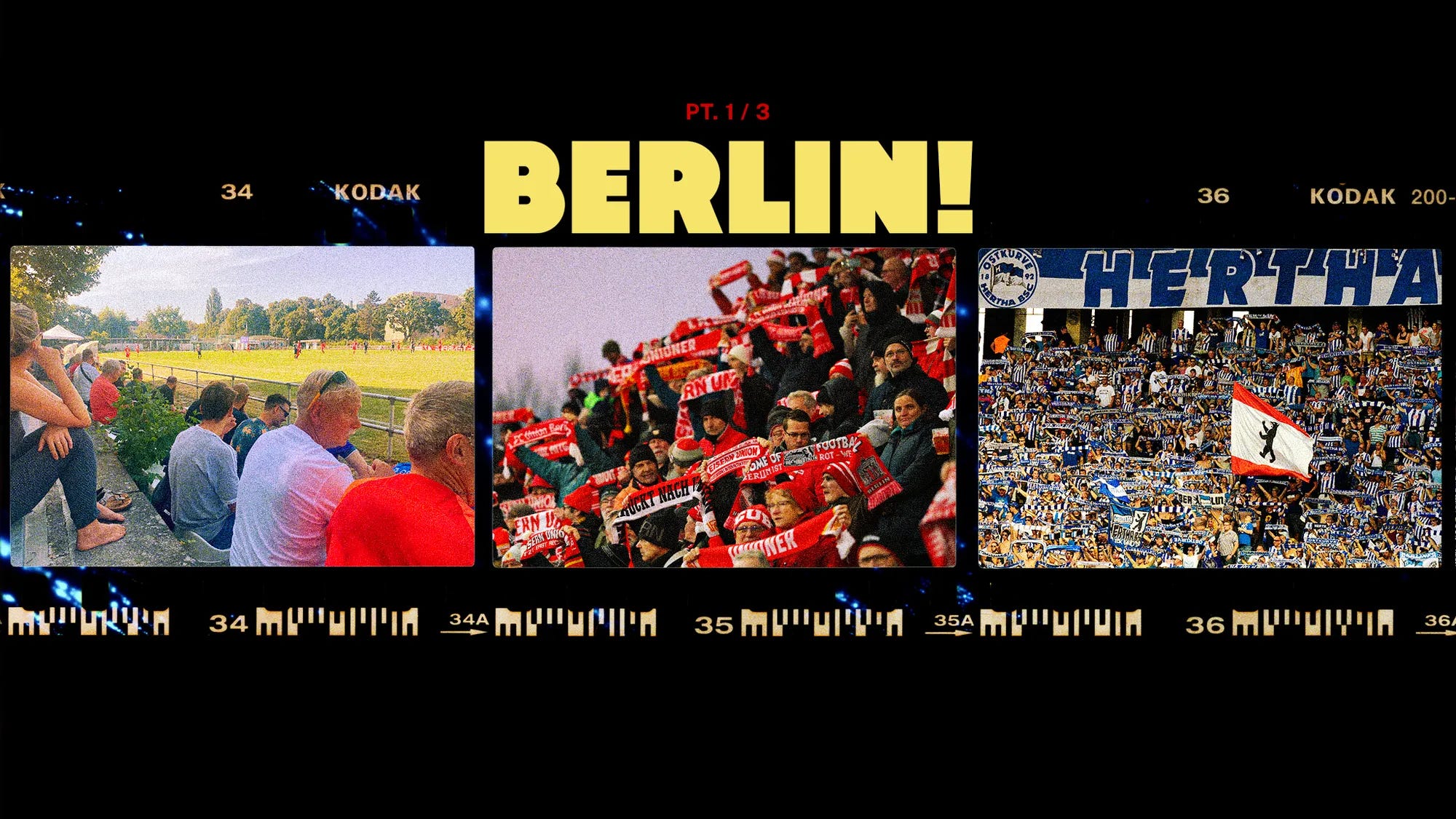
Berlin Trilogy
Even though Bundesletter has been a bit quiet of late, I’ve still been busy. Check out the intro to a piece I wrote for the lads over at MUNDIAL below. It’s the opening salvo to a three-piece series I’ve put together for them, covering Berlin’s football culture. I’m really proud of it. I’ve also included some links to other pieces I’ve written for them over the past few months.
Bis später!
What you do with a rainy Saturday afternoon in the middle of Berlin’s notoriously grey winters reveals a lot about you.
A fair chunk of the city’s population are either in the midst of—or recovering from—a hedonistic plunge into the nether regions of Berlin’s famous techno and sex clubs. The avant-garde types will be soaking in the city’s art scene; the Hauptstadt is home to the most galleries of any conurbation in Europe. The normies are holed up in an independent cinema, a cafe, maybe their local kneipe—the corner bars that have remained untouched by creeping gentrification.
Me? I’m trying to jemmy open a chain-locked gate to get a better photo of Poststadion, a small municipal sports stadium that hosted football during the 1936 Olympics, for my newsletter on German football culture.
I need to crack on with my walk. I'm tracing one of the paths of Berlin’s Fußball Route, a self-guided tour that details the history of the sport in the city, and I have approximately eight more kilometres of pavements to traverse. I’m only on my second spot, but I’m already a bit pissed off at the seemingly non-existent information boards that are meant to landmark my journey. Rather than trudge on, I take a seat on a bench next to an astroturf where two grassroots clubs are plying their trade. I think it’s a post-winter break friendly, allowing the part-timers the chance to regain their fitness after a sedentary and gluttonous Weihnachtsferien. The standard is halfway decent, but when a portly right back is concussed by an errant diagonal ball from his own centre-half, I move on with my journey.
How to Make a Stone Cold Classic — An interview with Ina Franzmann, the designer behind West Germany’s iconic Italia 90’ kit
Glad to see you are still planning to do a modified version. It’s a fantastic idea and I’m looking forward to your posts and videos.